Understanding the Lizard Within: Insights from Father’s Day

Around Father’s day,(2025) I went for lunch with a mentor, fellow traveler and confidante who has taught me many things over the years.

One of the things he helped me conceptualize is the “Lizard”.

 “ I have a lizard in myself, which tells me that these programs of recovery, therapy, 12 steps, meditation and gratitudes are not going to work for me. The lizard takes me to dark places, which sabotage my safety, serenity and self-worth.”

Mevame Again

We sat at Mevame again (Rutherford) and discussed things which we would not discuss in a recovery meeting in front of others.

Many years ago, a senior fellow told me that though the fellowships are supposed to be anonymous, within six months, people know many things, so one should be discrete as to what one shares.

Father’s Day walk

We went through the intergenerational issues, as he recalled his earlier years in Toronto, having been put in grade 3 instead of grade 5 where he should have been. The next year, he got a double promotion, as he did well academically.

He showed me a panorama of what life was in Toronto- Don Mills area in the 1950s/60s when he went to school. We got to current issues of his wife’s trip to Australia, how the lives of his daughters, the way their marriages have evolved has affected him and his sense of family.

Life in America-(From Number our Days- Barbara Myerhoff)

We discussed Number of Days, written by the cultural anthropologist Barbara Myerhoff, who studied a community of elderly Jews in the mid 1970s. This pioneering ethnographic work is an intimate chronicle of the lives of elderly Jewish Immigrants in Venice, California, particularly those associated with the Israel Levin Senior Center. Her work weaves storytelling, anthropology, and reflexivity to illuminate how identity, memory, and community persist and adapt in the face of aging, loss, and marginalization.

Application

In my work with marginalized and minoritized communities, I have worked with elderly persons from the Jewish community, South Asian and Asian elderly persons and also their caregivers. Caregiver burnout is an often neglected aspect which hurts the family dynamic.

2017- Spring walks- Port Credit-Lake Ontario- Earlier Perspectives – https://prashantbhatt.com/2017/03/22/every-object-has-a-story/

Every Object has a story- the work of Sara Angelucci-

Creative solutions: Needle and Thread

God’s greatest invention

A little needle

Humble, bright and quick,

A gift to Eve

To make us clothes,

She sews and takes us

From animals to people.

In Paradise what are we?

Pure nature, without inventions.

Not yet born,

Until a needle

Makes us into me.

“These are a tailor’s words. The poem, you see, I wrote in Jewish. That is because Jewish is the right language for the sweatshop. Not Hebrew- too elevated. Not French- too refined. Not Polist-too robust. Only Jewish could express a tailor’s thoughts in America, working with his needle. (Page 69,70; Number our Days, Barbara Myerhoff)

Remembering Father’s Day Walk-Malta 2012

This conversation in Rutherford – Maple, Greater Toronto Area reminded me of a walk with a senior of the Maltese Indian community in 2012. He graciously invited us for lunch, recalled his family and community journeys from India, East Africa to Southern Europe and how things have evolved over the decades. Every journey has its surprises. After a session of Yoga at the Community centre at San Gjwann, we went for lunch at Valletta and then he took us for a walk through a cemetery where some of the community elders have been laid to rest.

Malta-2012

Readings and Reflections-Connection with Culture and Community:

Kariya Park-Mississauga-June 2025

A Teacher’s Prayer

The boy who was once demoted to grade 3, eventually became a teacher, and influenced many lives. Apart from teaching many about the steps of recovery, he also gave me the gift of a Teacher’s Prayer.

“As a teacher, I can influence the lives of students. So I have to take extra care. One remark can do a lot of damage to a teenager already struggling with self-esteem and confidence issues,” he told me as we ended our lunch meeting.

We will meet again.

You can download Lizard Worksheet here- 
Re-membering

Understanding Grief: Finding Meaning Through Narrative Therapy

30 August is Grief Awareness Day. 

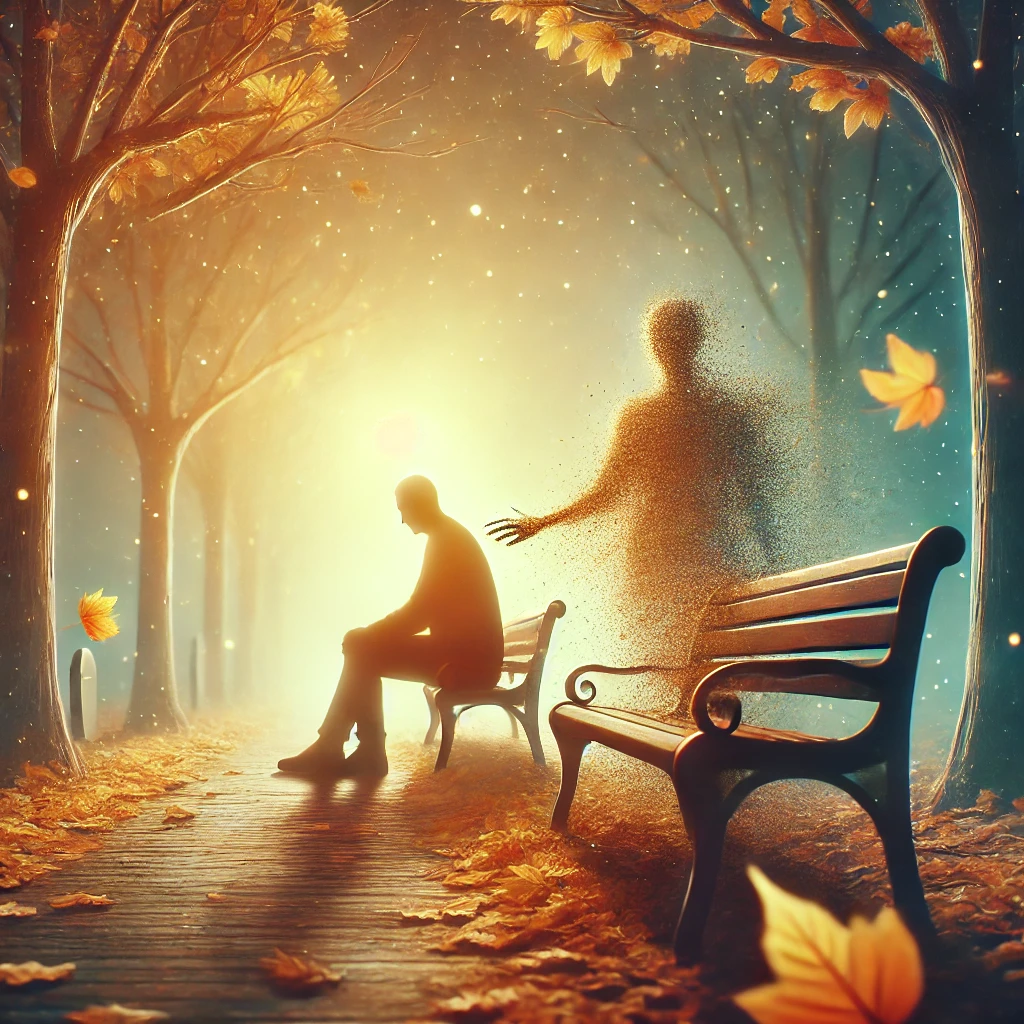
People who have lost someone have a certain look recognizable maybe only to those who have seen that look on their own faces. I have noticed it on my face and I notice it now on others. The look is one of extreme vulnerability, nakedness, openness.”

Didion, (2007, p.35)

The stages of grief model of Kubler Ross and David Kessler talks about Denial, Anger, Bargaining, Depression, Acceptance, Finding meaning. 

Case scenario– The long term partner chose not to be with him when he went for MAID- Medical Assistance in Dying as she did not want to increase the conflicts in his family. The step sons, brothers do recognize her, but the ex-wife and related persons would be uneasy by her presence. As she struggled with feelings of guilt, shame, confusion we turned to Narrative therapy informed techniques to deepen the finding meaning.

Remembering Conversations- Discussing the contributions of a loved one to your life, your contributions to their life and how one would imbibe those lessons and memories going forward

Background:  Re-membering is a Narrative Therapy (NT) intervention in which we dig deeper into the implication of one’s contribution to the person’s identity, that person’s contribution to our life, how one’s identity would be viewed through that person’s eyes and the implication of these contributions (White, 2007)

Finding meaning

The contribution to each other’s identity conversations led to how he had helped her process her loss when her ex-husband passed away, and she wanted to be there for the sake of her sons from that marriage. Her partner had helped her in that difficult stage and they found meaning in deeper conversations on the processes of family, parenting and life. Her own contribution to his identity was on finding renewed meaning in his connection with his step-sons, after his marriage dissolved. His step sons spoke at the funeral and mentioned how they had seen a different way of relating as their father (the only person they knew as their father- climbed upon him when they were children- as their own biological father had left when they were very small). 

When one views one’s identity through that person’s eyes, reflects upon the implications of these contributions one can find go beyond day-to-day life and have a richer connection.

Exercise

Stop and try to remember a person who has physically passed, and remember the joint energy of that relationship.

An aid could be try to remember a shared moment and see how it felt to be together, what remains from that moment and how you would imbibe that energy in your life.

Share as comfortable.


What was the experience of re-membering and sharing like.

My example: Nature walks early in the morning were a gift my father gave to me. I remembered him on his 4th death anniversary on a walk up the Hills near Haridwar, Uttarakhand India in 2003. That moment of imbibing the joint energy has been imbibed into my life by many such nature walks over the decades. One of his other contributions in my life was to model what a flashcard and a checklist would do to one’s work. In my pre-school years, I saw him make flash cards of important drugs, how they would interact with other drugs and with body systems in different stages of disease (he was an anesthesiologist). Having such flashcards and checklists have been part of my professional identity. 

Re-membering models could see these experiences (nature walks, checklists, flashcards) be revisited by seeing how these experiences contributed to each other’s meaning. As I went into hostel (medical school days-Delhi 1980s) we went for nature walks to the hills of Shimla, Himachal Pradesh, India and he talked about his younger childhood years, we prayed at the temples which he had visited as a child. Those pilgrimages, museum walks have imbibed in me the spirit of taking my own sons, nephews, nieces to museums, natural areas. 

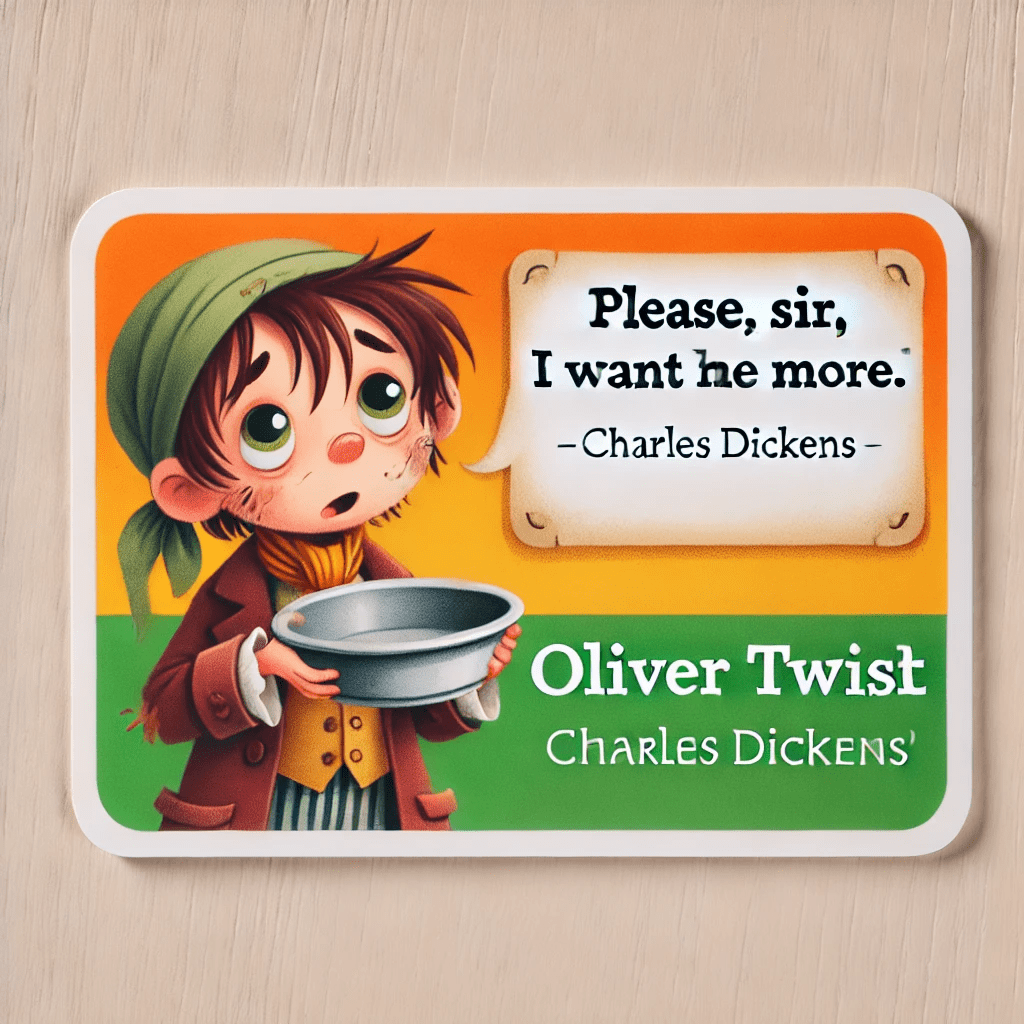
My grade 3 teachers in St Vincent’s High School Pune, Maharashtra, India- 1975-76, introduced me to Charles Dickens through the story of Oliver Twist. The love of the written word is a legacy my parents passed on to me. They started our Home Library even before I entered grade 1.

If his spirit would see/experience this, he would view it as an extension of our walks together in the Western Sahyadri ranges and Northern Himalayan ranges of India.

Key words

Grief,  Finding Meaning, Identity, Definitional Ceremonies, Remembering, Narrative Therapy

Walks-New York Botanical Gardens; My parents instilled the love of the written word, nature and science in me. My mother, a botanist, created the first Rock Garden I knew, in Poona, Western India in 1970s. Looking at this Rock Garden at NYBG-June 2025-sent me down memory lane. What part of our identity is shaped by a loved one?

References White, M. (2007). Maps of narrative practice. WW Norton & Company.