Look for her among her friends- a suggestion by Irvin Yalom, in his book “Staring at the Sun” set me down memory lane. I encourage this to clients suffering from grief. The book tells how self-disclosure can be used to further the therapeutic collaboration.
Recognize, Accept Investigate Non judgment and Mr.Anger
As the anniversary of his mother came, he called his mother in law now in her 80s. She was one of his mother’s good friends.
My friend told of the times when he was being told in subtle and not so subtle ways to not bother others.
Grief is a journey, and my friend Mr.A has helped me see many ways in which he has mapped his journey of grief.
One of the things he grieves is the loss of his home, which he built, in the 1990s, when his mother was alive. Now he goes to the same house, to do service, having spent many years in 12 step recovery. However, he did confide that there are uneasy moments when he is told to shape up or shape out, which does not go well for his self esteem and connection.
In the blog on Anger (Dragons or Donkeys) – we had gone through the different approaches to Anger using the classical CBT model- STOPP tools and the Narrative therapy tools of externalization, scaffolding conversations and remembering.
One year on, we did a review of the issues faced through the Grief lens – remembering his mother, who passed away from cancer.
Recognizing his mother’s educator voice within him has been an important part of his growth journey. He remembers the sacrifices, adjustments and nurturing which went in the early years of coming to Canada. She was a well established teacher in a leading school of Bombay (Now known as Mumbai). The best job she could get was that of a bank teller. Her husband, who was a leading marketing executive, became a security guard.
Accepting the hurts and how they are affecting his day, and using the mindfulness tool of going back to a time in his childhood when he had seen abuse in his family of origin became a powerful tool to become more aware of his patterns.
We made a movie – and went back to one of the parties of his childhood, when after the party there would be bitter arguments between his parents. “When I was small, I used to hide and was terrified by the arguing which sometimes became physically abusive,” he said, reliving those moments. We went into the four areas of mindfulness- the body, feelings, thoughts and principles. At his level as a ten year old, he could remember the freezing of the body, the confusion and fear, bitterness at how the evening gathering which was so pleasant had deteriorated to this mess and the principle of family foundation being violated while being there for the four children.
In the here and now, of the therapy session, we went through these in a safe space and he could see those patterns being repeated in the recent episode of being told to Shut Up or Get Out.
As we linked the family of origin issue, how that memory stays in his body, feelings, thoughts and what new knowledge he has gained through therapy, he smiled at the habits of his head and heart.
Humber Walks-July 2025: Etienne Brule Park, Old Mills area of Toronto has been one of my thinking places for many years. Here I meet trusted fellows and friends. One such friend told me about the grief of the passing away of his mother, when he was 19 years old, and how he then descended into a life of Drugging and Alcohol. Through a program of Recovery he has been sober for over three decades and helps carry the message of Recovery-One Day at a Time.
Post script: Later that week, he made a phone call to his mother in law, now in her 80s, who told him, when his marriage was getting over. “For me, you will always remain my son-in-law, no matter what happens between my daughter and you.” That moment of being valued served as a message of connection, hope and reconciliation in some of the darkest moments of his life.
Look for her among her friends, the principle came alive in a near and particular way for my friend.
References: Adapted from
Adler, A. (2014). Individual psychology. In An introduction to theories of personality (pp. 83-105). Psychology Press.
Siegel, D. J. (2010). The Mindful Therapist: A Clinician’s Guide to Mindsight and Neural Integration (Norton Series on Interpersonal Neurobiology). WW Norton & Company.
Yalom, I. D. (2008). Staring at the sun: Overcoming the terror of death. The Humanistic Psychologist, 36(3-4), 283-297.
Around Father’s day,(2025) I went for lunch with a mentor, fellow traveler and confidante who has taught me many things over the years.
One of the things he helped me conceptualize is the “Lizard”.
“ I have a lizard in myself, which tells me that these programs of recovery, therapy, 12 steps, meditation and gratitudes are not going to work for me. The lizard takes me to dark places, which sabotage my safety, serenity and self-worth.”
Mevame Again
We sat at Mevame again (Rutherford) and discussed things which we would not discuss in a recovery meeting in front of others.
Many years ago, a senior fellow told me that though the fellowships are supposed to be anonymous, within six months, people know many things, so one should be discrete as to what one shares.
Father’s Day walk
We went through the intergenerational issues, as he recalled his earlier years in Toronto, having been put in grade 3 instead of grade 5 where he should have been. The next year, he got a double promotion, as he did well academically.
He showed me a panorama of what life was in Toronto- Don Mills area in the 1950s/60s when he went to school. We got to current issues of his wife’s trip to Australia, how the lives of his daughters, the way their marriages have evolved has affected him and his sense of family.
Life in America-(From Number our Days- Barbara Myerhoff)
We discussed Number of Days, written by the cultural anthropologist Barbara Myerhoff, who studied a community of elderly Jews in the mid 1970s. This pioneering ethnographic work is an intimate chronicle of the lives of elderly Jewish Immigrants in Venice, California, particularly those associated with the Israel Levin Senior Center. Her work weaves storytelling, anthropology, and reflexivity to illuminate how identity, memory, and community persist and adapt in the face of aging, loss, and marginalization.
Application
In my work with marginalized and minoritized communities, I have worked with elderly persons from the Jewish community, South Asian and Asian elderly persons and also their caregivers. Caregiver burnout is an often neglected aspect which hurts the family dynamic.
Every Object has a story- the work of Sara Angelucci-
Creative solutions: Needle and Thread
God’s greatest invention
A little needle
Humble, bright and quick,
A gift to Eve
To make us clothes,
She sews and takes us
From animals to people.
In Paradise what are we?
Pure nature, without inventions.
Not yet born,
Until a needle
Makes us into me.
“These are a tailor’s words. The poem, you see, I wrote in Jewish. That is because Jewish is the right language for the sweatshop. Not Hebrew- too elevated. Not French- too refined. Not Polist-too robust. Only Jewish could express a tailor’s thoughts in America, working with his needle. (Page 69,70; Number our Days, Barbara Myerhoff)
Remembering Father’s Day Walk-Malta 2012
This conversation in Rutherford – Maple, Greater Toronto Area reminded me of a walk with a senior of the Maltese Indian community in 2012. He graciously invited us for lunch, recalled his family and community journeys from India, East Africa to Southern Europe and how things have evolved over the decades. Every journey has its surprises. After a session of Yoga at the Community centre at San Gjwann, we went for lunch at Valletta and then he took us for a walk through a cemetery where some of the community elders have been laid to rest.
Readings and Reflections-Connection with Culture and Community:
Kariya Park-Mississauga-June 2025
A Teacher’s Prayer
The boy who was once demoted to grade 3, eventually became a teacher, and influenced many lives. Apart from teaching many about the steps of recovery, he also gave me the gift of a Teacher’s Prayer.
“As a teacher, I can influence the lives of students. So I have to take extra care. One remark can do a lot of damage to a teenager already struggling with self-esteem and confidence issues,” he told me as we ended our lunch meeting.
Satipatthana Insights and Integration into Counselling
Thus the dhammas mentioned in this satipaṭṭhāna are not “mental objects”, but are applied to whatever becomes an object of the mind or of any other sense door during contemplation.
Analayo, Satipatthana, The Direct Path to Realization
In the previous blog we had explored the Johari Window. to examine Prejudices and Presumptions. In this blog we will discuss Mindfulness (Sati-patthana), Countertransference (Classical Freudian and Refined-Heimann Racker view) with some examples in Therapy sessions -Couples in conflict and an exhausted caregiver of an elderly aunt.
I use my own experiences with mentors in Mindfulness and life experiences and how they were processed through psychotherapy to illustrate some points. In the end there are downloadable worksheets on PEARLS of Mindfulness with exercises which will help orientation.
***
For the first quarter of 2025, I formally studied Satipatthana meditation under the guidance of Mentors from Barre Centre of Buddhist Studies (BCBS) based on commentaries and talks of Bhikhu Analayo.
2024-Feb-Barre Centre of Buddhist Studies- Central Massachusetts, Awareness of Elements in Morning Walking Meditations
After finishing my graduate studies in Psychotherapy, I had choices to deepen my understanding of the many approaches which we were introduced to in this program. Being from the medical world, I was initially attracted to the structure of CBT- Cognitive Behavioural Therapy, and studied the Third Generation CBT approaches – based on Acceptance and Commitment, and Dialectical Behavioural therapy.
I still use these tools , but my path was more towards understanding existential issues – and hence the first guided retreat I did was at BCBS on the theme of Death- Maranasati (Nikki Mirgafori-2024-February). Before that I had been guided on Metta Meditation-Living Kindness (Kevin Griffin- Spring 2024). After that I have done silent retreats at Barre and Manresa-Pickering
Background of Satipatthana
The seven spokes of Satipatthana- Mindfulness Foundation Meditation-
Satipatthana is a compound of Sati-Mindfulness and either Patthana- foundation or upatthana- presence.
The spokes of Satipatthana are based on
1- Body –
Spoke 1- Anatomy
Spoke 2- Elements
Spoke 3- Death
note – having been in medicine since 1985, first starting anatomy in cadaver labs of Maulana Azad medical college, Delhi -1985, and then studying Radiological Anatomy – Seth G Medical – KEM Mumbai ( 1993), I have an intricate knowledge of different body tissues, and how they look in different imaging modalities. Having studied and practiced Manual Osteopathic medicine in Canada, have revised and updated my concepts of Functional Anatomy.
2- Feelings
Spoke 4 – Feelings
3- Mind/Consciousness
Spoke 5- Thoughts-
4- Principles (Dhammas)
Spoke 6- Hindrances
Spoke 7- Awakening factors
PEARL Application on Transference and Countertransference
One of my motivations to formally study the Satipatthana was to see for points of transference and countertransference, and to use Sati (Mindfulness) to strengthen the Therapeutic Alliances
Freud wrote in 1910:
“We must recognize that the doctor too has his unconscious, which can interfere with the analytic work… We must not neglect to reckon with this countertransference…”
Transference refers to a client redirecting emotions from another person or experience (people, places, principles, things, thoughts, emotions, feelings, memories, sensations) to the counselor . Countertransference refers to a counsellor redirecting emotions from the past, unto a client.
Freud’s classical view of countertransference as a hindrance, a contamination of the therapeutic process due to unresolved unconscious conflicts has been challenged by Theorists like Melanie Heimann (On Counter-transference, 1950) and Heinrich Racker (1957, 1968)in which the understanding and utilization of countertransference was redefined.
Freudian Classical View
Countertransference is obstacle
To be avoided, own work to be done
Heimann/Racker Refined View
Countertransference is a valuable clinical tool
Illuminate patient’s unconscious Communication
Viewed as a part of mutual field
Counsellor is a participant-observer
Eg- Classical view can help us Examine our Biases and Blindspots
Refined View can use our own reactions to Empathize, identify dynamically with the client’s internal object relations
Classical view -self disclosure to be avoided
Refined View : Self disclosure- if it is beneficial to client- is encouraged
Can be used to develop alliance
For example
Client( C) – My aunt is struggling with dementia and it is affecting my mother
Therapist(PB)- Countertransference-Classical– Remembering his own parents, how they passed before becoming old, father in accident, mother widowed at age 54. View it as a hindrance and have processed it in therapy myself
(One of the few times I have cried in a therapy session was when I discussed being called to the hospital to identify my father’s body..
Experience– Men -especially South Asian Men- Cry Alone
Strength- Through Therapy I finally made that list of traumas which I have never talked about with anyone
Hope- through these open safe alliances was able to process how these affect my life and relationships)- so do I bring this up – Classical view does not encourage self disclosure
Countertransference-Refined- Does view the way relationships affect each other and in a spirit of openness can tune in to the day to day life of a caregiver, what it is like to open up about one’s self care as a caregiver, the advantages and disadvantages of Taking a Pause
Energy field as- Participant Observer– see the tone of the client, as she shares about these struggles, watch for any points when the client hesitates, see for topics which open up the flow of discussion.
Eg- C- It is difficult to talk to my mother as she faces a lot of stress
PB- How has your day been affected by these conversations? (Invite/Open and then Monitor-Modify the Therapeutic alliance)
PB- Participant Observer- Self Disclosure mode
The rhythm of my family life changed forever after my father suddenly passed away. How does the rhythm of your day change after you discuss about identity and belonging with your mother? What routines of grounding have you imbibed? For example- after my father passed- I was mindful of what programs I would watch on television, as one day I found my mother and sister weeping in front of the television as old Hindi movie songs which my father used to sing were being aired.
C- Well- (pausing to think) – it is painful to talk about this with my mother, she doesn’t really know what to do, and the medical carers have told there is really no point in trying to revise her diet, though she has gained a lot of weight.
PB (Participant Observer mode) – feels the shift in energy- as we bring the discussion back into how client feels, rather than how her mother feels, how the organized medical care system is different from family carers.
Debrief of Invite-Open-Monitor-Modify
Principle- Therapist as temporary Attachment Figure
Invite- To share about conversations and their effects
Open- Field of Alliance to the energy of those shared moments with mother, shared moments in therapy, and integrating them into one’s patterns.
Monitor- The tone, energy, hesitation, flow
Tone- she paused, there was a deeper slower flow
Energy- maintained neutral tone- was mindful of body language, non verbal cues
Hesitation- let that moment hold- (did not give any further cues)
Flow- Integration of awareness of nuances of flow when she talks to persons, topics
PEARL and Communication on Conflicts
Using Sati-Mindfulness and my knowledge of Countertransference as a tool to develop therapeutic alliance, made me use the Feelings tone (Neutral, Unpleasant, Pleasant) to balance the energy when the partners would get involved in the attack-defend mode. Instead of jumping into summarizing what one has heard, what the partner hears-how the feel about it, we agreed to take these moments of shared alliance as protective embodied moments of healing in a neutral balanced tone.
Application in session
Counsellor (PB)- So how has the past week been
Wife (W)- It has been up and down, at times I was angry, at times afraid to express
Husband (H)- We are working on the tools you suggested, and recording and re-hearing our discussions to make us both more aware of how we sound, how the other person reacts.
Classical Counselling View- would be to summarize the thoughts, feelings, sensations, emotions, memories and try to gather moments of connection, compassion, clarity.
Mindfulness – Modified Application- Pause and feel the energy, watch for unpleasant, pleasant and neutral moments and create a spectrum of Ease to Unease, see how communication does not turn into a contest into who is right, who is wrong.
PEARL Summary
Protective- Contest is diminished
Embodied- Alliances are strengthened
Attentive- to Calm
Receptive- Absorb shared moments
Liberating- De-link from Drama cycles
Reflection Questions
1- Are you aware of your body, the sore points, your posture, gait, and how do you ground yourself? How will you apply this to impermanence, fading, cessation and letting go?
2- Freudian Classical view takes countertransference as a hindrance. How does the refined view differ? Have you experienced or discussed this with a therapist?
3- The Mindfulness – Satipatthana view will observer the hindrances and awakening factors. How was the classical CBT method- (summarizing, reflection of feelings, creating SMART-specific measurable achievable realistic timed goals) different from the Mindfulness approach- of acceptance, observation and letting go? Did you notice the difference in the couples therapy- where we collaborated rather than contested?
SUMMARY
Through the lens of Sati-patthana, I reflect upon my experiences as a counsellor and see how Countertransference and Therapeutic Alliances can be refined.
Being guided by experienced practitioners helped me develop nuances. The energy field of a therapeutic alliance can explore and examine, express and expand personal and interpersonal themes.
In Couples therapy the use of Neutral Feelings tone helps. In Individual Therapy of persons caring for elderly, I used countertransference and self disclosure to open up the flow of sessions. The seven spokes of Satipatthana can be applied in many creative ways as they interact with each other.
In helping map these journeys, examine their territories through the lens of psychotherapy and mindfulness, we try to be more wholesome.
* * *
RESOURCES
You can download the worksheets on PEARL Application and also give a call to try out this approach to building Personal Family alliances and Therapeutic Alliances
References
Anālayo, B. (2015). Understanding and practicing the Satipaṭṭhāna-sutta. Buddhist foundations of mindfulness, 71-88.
Heimann, P. (1956). Dynamics of transference interpretations. The International Journal of Psycho-Analysis, 37, 303.
Holmes, J. (2014). Countertransference before Heimann: An historical exploration. Journal of the American Psychoanalytic Association, 62(4), 603-629.
Understanding Grief: Finding Meaning Through Narrative Therapy
30 August is Grief Awareness Day.
People who have lost someone have a certain look recognizable maybe only to those who have seen that look on their own faces. I have noticed it on my face and I notice it now on others. The look is one of extreme vulnerability, nakedness, openness.”
Didion, (2007, p.35)
The stages of grief model of Kubler Ross and David Kessler talks about Denial, Anger, Bargaining, Depression, Acceptance, Finding meaning.
Case scenario– The long term partner chose not to be with him when he went for MAID- Medical Assistance in Dying as she did not want to increase the conflicts in his family. The step sons, brothers do recognize her, but the ex-wife and related persons would be uneasy by her presence. As she struggled with feelings of guilt, shame, confusion we turned to Narrative therapy informed techniques to deepen the finding meaning.
Remembering Conversations- Discussing the contributions of a loved one to your life, your contributions to their life and how one would imbibe those lessons and memories going forward
Background: Re-membering is a Narrative Therapy (NT) intervention in which we dig deeper into the implication of one’s contribution to the person’s identity, that person’s contribution to our life, how one’s identity would be viewed through that person’s eyes and the implication of these contributions (White, 2007)
Finding meaning
The contribution to each other’s identity conversations led to how he had helped her process her loss when her ex-husband passed away, and she wanted to be there for the sake of her sons from that marriage. Her partner had helped her in that difficult stage and they found meaning in deeper conversations on the processes of family, parenting and life. Her own contribution to his identity was on finding renewed meaning in his connection with his step-sons, after his marriage dissolved. His step sons spoke at the funeral and mentioned how they had seen a different way of relating as their father (the only person they knew as their father- climbed upon him when they were children- as their own biological father had left when they were very small).
When one views one’s identity through that person’s eyes, reflects upon the implications of these contributions one can find go beyond day-to-day life and have a richer connection.
Exercise
Stop and try to remember a person who has physically passed, and remember the joint energy of that relationship.
An aid could be try to remember a shared moment and see how it felt to be together, what remains from that moment and how you would imbibe that energy in your life.
Share as comfortable.
What was the experience of re-membering and sharing like.
My example: Nature walks early in the morning were a gift my father gave to me. I remembered him on his 4th death anniversary on a walk up the Hills near Haridwar, Uttarakhand India in 2003. That moment of imbibing the joint energy has been imbibed into my life by many such nature walks over the decades. One of his other contributions in my life was to model what a flashcard and a checklist would do to one’s work. In my pre-school years, I saw him make flash cards of important drugs, how they would interact with other drugs and with body systems in different stages of disease (he was an anesthesiologist). Having such flashcards and checklists have been part of my professional identity.
Re-membering models could see these experiences (nature walks, checklists, flashcards) be revisited by seeing how these experiences contributed to each other’s meaning. As I went into hostel (medical school days-Delhi 1980s) we went for nature walks to the hills of Shimla, Himachal Pradesh, India and he talked about his younger childhood years, we prayed at the temples which he had visited as a child. Those pilgrimages, museum walks have imbibed in me the spirit of taking my own sons, nephews, nieces to museums, natural areas.
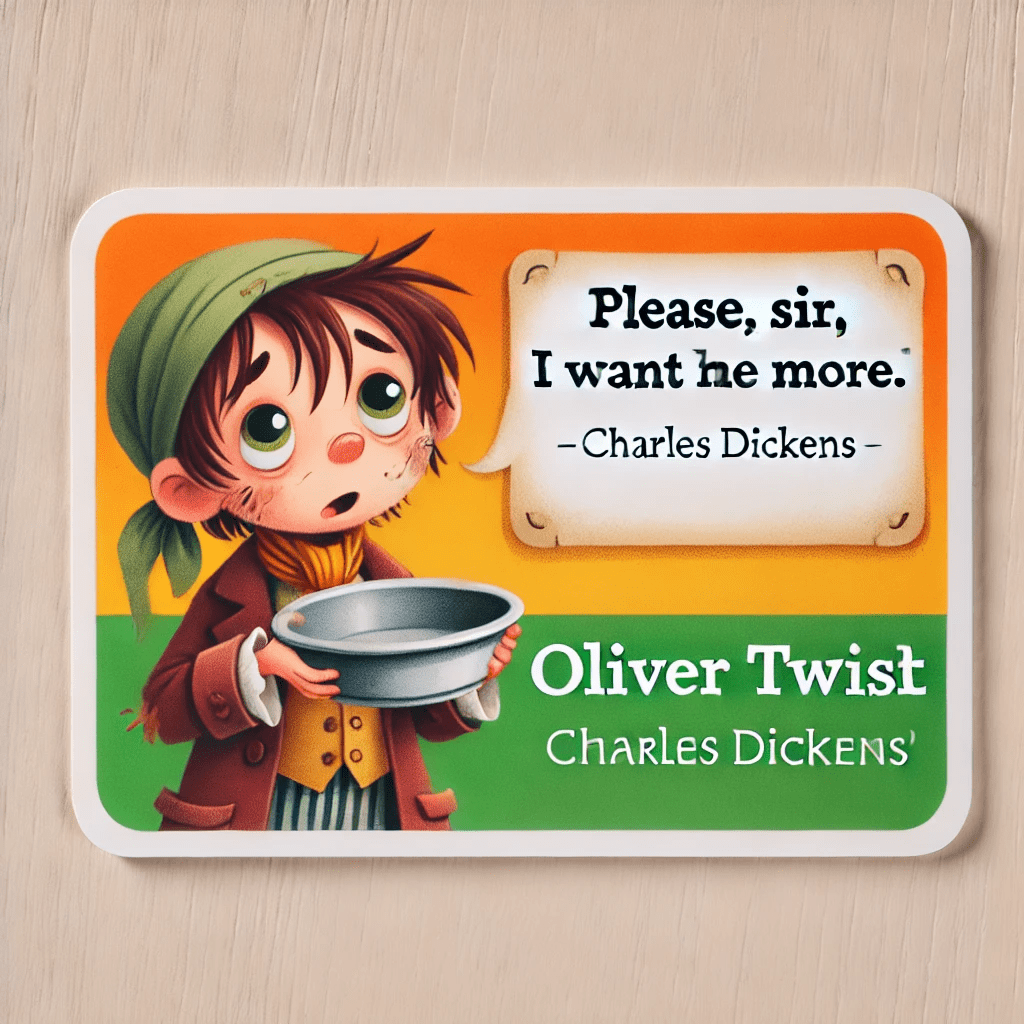
My grade 3 teachers in St Vincent’s High School Pune, Maharashtra, India- 1975-76, introduced me to Charles Dickens through the story of Oliver Twist. The love of the written word is a legacy my parents passed on to me. They started our Home Library even before I entered grade 1.
If his spirit would see/experience this, he would view it as an extension of our walks together in the Western Sahyadri ranges and Northern Himalayan ranges of India.
Walks-New York Botanical Gardens; My parents instilled the love of the written word, nature and science in me. My mother, a botanist, created the first Rock Garden I knew, in Poona, Western India in 1970s. Looking at this Rock Garden at NYBG-June 2025-sent me down memory lane. What part of our identity is shaped by a loved one?
ReferencesWhite, M. (2007). Maps of narrative practice. WW Norton & Company.
Gendered Socialisation Navigating Alexithymia in Immigrant Families
Boys are taught to value and lead to certain parts of them. Girls are taught to do the same but with other parts.Boys were nurtured by their caretaker, till around 4-5 years, and then for fear of being “sissified” they were wrenched away and may even be shamed for showing emotions.
Schwartz, 2023
In the cultural context of immigrant families in North America, I found many men who are unable to express and explore their emotions.
Case scenario: Relationships, Un-Manliness and Cultural Messaging
Tanmay (a composite), a 27 year old graduate student, struggling after the break up of his second online relationship came to me feeling uncertain, confused and hesitant to restart another relationship. As we went into his family of origin to see for underlying patterns, he told of how his parents stayed in the Middle East before shifting the family to Canada, while the father continued to earn and support the Canadian journey. This is a common theme found in Subcontinent origin families. As we went into the way emotions were expressed (or suppressed) in the family, the dynamic of a long distance parent, the emotional instability with no proper economic roots in this society came forward.
Themes around “un-manliness” and what it is to be the “typical male” came up.
Terry Real, in his book, I don’t want to talk about (1998) talked about difficulty with intimacy, workaholism, alcoholism, abusive behaviour and rage as being failed solutions to escape depression.
The Toronto Alexithymia Scale can get one started on becoming aware of the patterns and messages which one has imbibed
Alexithymia and Immigrant journeys
Coined by Peter Sifneos in 1973, the term comes from Greek roots meaning “no words for emotions.” Alexithymia is often observed in various psychological, medical conditions and in the context of immigrant families can be experienced in varying degrees depending on the level of assimilation, marginalisation, integration and separation. (Akhtar, 2010; Sifneos, 1973)
Therapeutic Process: Third Wave-Cognitive-behavioral therapy (CBT) approaches like Acceptance and Commitment therapy (ACT) with focus on emotional awareness and expression can be useful in addressing these issues
For example
Journal of Emotions: T was encouraged to keep a journal where he noted daily events and attempted to label his feelings associated with those events.
The story of how emotions were expressed in his family of origin was started by making some jottings on how he remembers his own parents relating to his grandparents. These cultural messages can be more nuanced as we see the effect of immigration and the early years (first three to five years in Canadian society are very difficult, especially for de-credentialied professionals who try to make it through using labour market or delivery jobs)
Mindfulness Practices: Polyvagal theory informed approaches will help tune to one’s internal states, aiding in the recognition of subtle emotional cues.
The polyvagal journal will be aware of the dorsal vagal (freeze), sympathetic (fight , fright) and the ventral vagal (social, tend, befriend) and use this format to be more aware of one’s tendencies (Dana,2020)
Psychoeducation: Awareness of emotions, their importance, and how to recognize different emotional states in himself and others can lead us to a life of greater connection and fulfilment.
References
Akhtar, S. (2010). Immigration and acculturation: Mourning, adaptation, and the next generation. Jason Aronson.
Dana, D. (2020). Polyvagal exercises for safety and connection: 50 client-centered practices (Norton series on interpersonal neurobiology). WW Norton & Company.
Real, T. (1998). I don’t want to talk about it: Overcoming the secret legacy of male depression. Simon and Schuster.
Schwartz, R. (2023). You Are the One You’ve Been Waiting For: Applying Internal Family Systems to Intimate Relationships. Sounds True.
Sifneos, P. E. (1973). The prevalence of ‘alexithymic’ characteristics in psychosomatic patients. Psychotherapy and Psychosomatics, 22(2-6), 255-262.








 Candlestick Counselling and Psychotherapy Services