Subterranean Life of the Hour

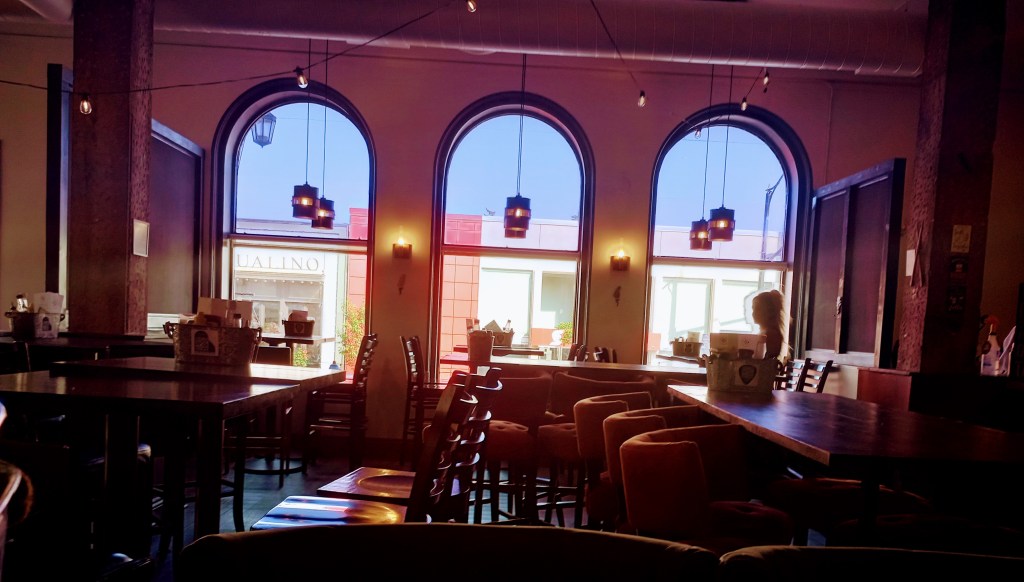
Island Lake Conservation Area-Orangeville-Ontario; Sep 14-2025: Exploring the Subterranean Life of the Hour is one of my tools of growth.

In existential therapy, the “life of the hour” and what is unfolding in this very moment is used as a tool to help healing.

I have worked with supervisors who taught me to harness these moments and transform and expand the energy of the safe healing moments to other aspects of life. Another tool is to go beneath the surface of a client’s words, silences, what is left unsaid or the nervous tone, subtle giggles 

SLH-Subterranean life of the hour -James F.T.Bugental (1915-2008)

James Bugental, was the President of the Association for Humanistic Psychology (1967). He coined the term “subterranean life of the hour” to describe the implicit, unspoken undercurrents in session. This helps develop deeper understanding of feelings, meanings, existential concerns. The different dimensions of SLH include (but is not limited to)

1- Presence and Absence Shifts

How much each is fully engaged or avoiding or going on tangents 

2- Non verbal cues

The tone, volume, silence, interruptions, bodily tension, hesitations and energy of the room

3-Existential themes 

Themes such as freedom, mortality, isolation, meaning that may not be consciously acknowledged but shape the therapeutic moment.

4- The Living Process Underneath

Listening not only to what is said but also to the living process underneath, the background, development and energy of the therapeutic relationship. How one shows up for the sessions and willingness or unwillingness (it is an evolving spectrum) to engage and be accountable.

Case Scenario

Consider a man in his 40s who has just ended a 15-year marriage. He now lives with a new partner, but both have decided not to not get married and just see how things develop.  He feels unsettled about how he has to repeat same things again and again but his partner does not seem to get it. There is uneasiness about the hours spent in work -juggling between clients and extended family in different time zones and then spending weekends in costly dinners and outings.

 When the therapist gently suggests exploring how his or his partner’s family of origin and family of creation issues (both have had previous marriages) may be shaping his struggles, he lashes out angrily:

Client (C ) : I don’t want to talk about my family or the past. That’s not why I came here!”

Therapist (T):  (feels the sting of his anger but resists retreating into intellectual explanations)
I can feel your pushback. Something in our relationship tells me that we want to explore this moment, not go anywhere else

Principle: Instead of intellectual explanations, use reflection, touch on the “life of the hour” and the “Subterranean life of the hour” to harness the fears which fuel the anger. Leverage the fear of losing control, or being engulfed in tangential past issues which have gone by and not be seen in the present or be mis-seen.

Present Field: Dwelling together in the present field: his anger, the therapist’s steadiness, the tension, the unspoken vulnerability can be used to harness the therapeutic relationship as a supportive relationship.

Worksheet

The following worksheet explores the tool of Subterranean Life of the Hour, with examples from the above scenario, and prompts of grounding, naming, attunement, dialogue and integration. If you would like to explore an existential issue – in a customized manner, you can reach out to Prashant Bhatt  or 6478181385


Worksheet: Exploring the Subterranean Life of the Hour

This worksheet is meant to help clients (and therapists) pause, reflect, and tune into the implicit life of the present moment.

Eg-Client – in his 40s-struggling with his common law partner lashes out angrily saying has not come here to see family of origin or family of creation (past failed marriage) issues

1- Presence and Absence Shifts

How much each is fully engaged or avoiding or going on tangents 

Principle: Engagement

Rest Stop

 Does the lashing out mark a rupture. If yes, how would you see it going forward.

If no- why not?

2- Non verbal cues

The tone, volume, silence, interruptions, bodily tension, hesitations and energy of the room

Principle: Mindfulness

Tool: Grounding

Take three slow breaths.

Notice your body: Where do you feel heaviness, tightness, warmth, or flow?

Let the present moment be enough.

Let Go and integrate the breaths with any uneasy feelings

3-Existential themes 

Themes such as freedom, mortality, isolation, meaning that may not be consciously acknowledged but shape the therapeutic moment.

Principle:  Naming the Hour

Tool: Without analyzing, put words to what is happening here and now.

Eg- The therapist named the anger, unease to explore habits of heart and head.

4- The Living Process Underneath

Listening not only to what is said but also to the living process underneath, the background, development and energy of the therapeutic relationship. How one shows up for the sessions and willingness or unwillingness (it is an evolving spectrum) to engage and be accountable.

Principle: Attunement Practice

  • Notice the other person’s face, tone, body language.
  • Notice your reactions (tightening, softening, pulling away, leaning in).
  • Practice holding both realities—mine and theirs—without judgment

Eg- The creation of empathy, going into the causes and conditions which led a person to have a certain position may be useful clues

Exploring Disconnection, resonance, what is left unspoken can be part of growth.

Rest Stop: When was the last time you felt unheard? How did you react? How do you feel about it now?

Note after the first three steps of 

1- Grounding

2- Naming

3- Attunement 

We can deepen this process by

4- Dialogue

5- Integration

Step 4. Dialogue with the Subterranean Life

Imagine the subterranean voice of the moment speaking.

1- Mindfulness of time tool- If we were having this conversation 20 years from now, what part of yourself would be protective, supportive of your needs.

2- Mindfulness of time-with spirit tool: if we were two spirits (on a human journey) having this conversation 200 years from now, what would you smile at.


Step 5. Integration

I use Mindfulness (Satipatthana) and Johari window to work through the issues of head and heart, intuition and intellect and create a customized map to help clients navigate and negotiate their journeys.

For eg- in the man in his forties who lashed out, we returned to the breath, body, energy of the room and wrote down one sentence which would capture what he discover about himself, his values and how the world works from the existential dissection of his moments of anger.

End Note

Intellectualization would lead to dismissal using words like “resistance” or pathologizing using terms as “avoidance”. Instead, by leaning into the subterranean life of the hour, engaging, grounding, naming and attuning with the pushback, we explored this factor with an attitude of invitation.

This attuned stance created a doorway to deeper truths: his anger was not against the therapist but against the unease of losing safety again.

All recovery lies in the pause. Pausing to notice and harness the subterranean life of the hour helps discover the underlying truths and longings for connection, recognition and freedom.

Breeze – Mindfulness of Breath – Some conversations on International Self Compassion Day-2025

International Self Compassion Day -2025-(July 19-2025)

In Kristen Neff’s book on Self Compassion she lists Common Humanity, Self Kindness and Mindfulness as three components of Self Compassion and also gives interesting exercises on being average which brings to focus the competitive nature of our culture, how the pressure to be better erodes the fun in just being. 

So, as part of this exercise of being average, I went for a walk by the Humber-Etiune Brule -Old Mills, had a cheese tuna sandwich at Caldense Symington and a small coffee at the Tim Hortons on Bloor with three trusted fellows-spiritual fellow travelers. 

We are just average persons in Greater Toronto Area-GTA, getting along in our lives. Each relationship has taught me some nuances of day to day life, enriched me and helped develop a deeper understanding of our shared journeys.  

In this blog will tell of some lists, some talks across the world and my experiences in interrogating the Satipathana and Anapanasati Suttas which have helped further my mindfulness practices.

Common Humanity: Our shared walks in North Africa

As part of intentionally reaching out, had a talk with a fellow traveler, a South Asian who has lived and worked in the Arab world. We had spent almost a decade together in Tripoli, walked together during the 40 year celebrations of Gaddafi’s regime and then witnessed first hand on the ground the revolt in the 42nd year. I remember the day he and another fellow traveler sat together for a dinner which I had imagined would happen soon, after the intense fighting would stop. Our journeys together helped me see the way he has imbibed humour to lessen the pain of forced internal migration from his homeland Kashmir. Navigating the medical world in different continents have helped him see what is possible, where we have dilemmas and how to negotiate with persons in power.

Self Esteem: Readings by the Humber, Lake Ontario, Rouge and the Zoo

Sketch Studies, Mindfulness walks in Nature and Discussions in Cafes

Does one matter? Am I a 5/10 or more when it comes to having a positive effect or less? (10 being yes I matter). These questions by Neff made me recall some walks I had in the zoos of Tripoli in 2009 when I told my sons about Thoreau’s Walden pond and the principles of Objectivity, Simplicity, Self Reliance which guided  Transcendentalists like Emerson, Thoreau, Alcott (author of Little Women).

Doing readings together, keeping notes, and engaging in a reading group, imbibing the lessons into a reading journal are part of my family legacy, passed on to me by my parents, grandparents and uncles, aunts, sisters. Following this, it gave me immense satisfaction to read about my son’s recent visit to Walden pond where Thoreau stayed in the mid 19th century.

This morning, on International Self Compassion day- went through some works of Kiran Desai-Inheritance of Loss, and reflected upon the relationship between the Judge (Jemmubhai), and the cook, who asks for punishment for his wrong doings, how his orphaned granddaughter Sai tries to intervene. Set in the backdrop of the Gorkhaland movement, the novel follows the stories of Biju, the cook’s son as a worker in the restaurants of New York City and his interactions with other Indian diaspora from different continents. The Indians of East Africa have a different way of relating to India, USA. 

Going by the reading journals and discussion groups I have had over the decades I would give myself a rating of over 5/10 in whether I mattered to my groups, family in this aspect.

Mindfulness: The Breath as a Gateway to Satipaṭṭhāna and Ānāpānasati

We Are of a Tribe by Alberto Rios

The dream of sky is indifferent to all this,
Impervious to borders, fences, reservations.

The sky is our common home, the place we all live.
There we are in the world together.

The dream of sky requires no passport.
Blue will not be fenced. Blue will not be a crime.

Look up. Stay awhile. Let your breathing slow.
Know that you always have a home here

Was guided by an experienced practitioner on how the breath is the gateway to both Satipaṭṭhāna and Ānāpānasati the intention is different. In Satipaṭṭhāna there is mindfulness with letting go , non attachment and the structure which gives  grounding at each level. The sutta has seven spokes at levels of body (anatomy, elements, death), feelings, thoughts and principles. Ānāpānasati moves from long and short breath awareness to whole body awareness and calming.

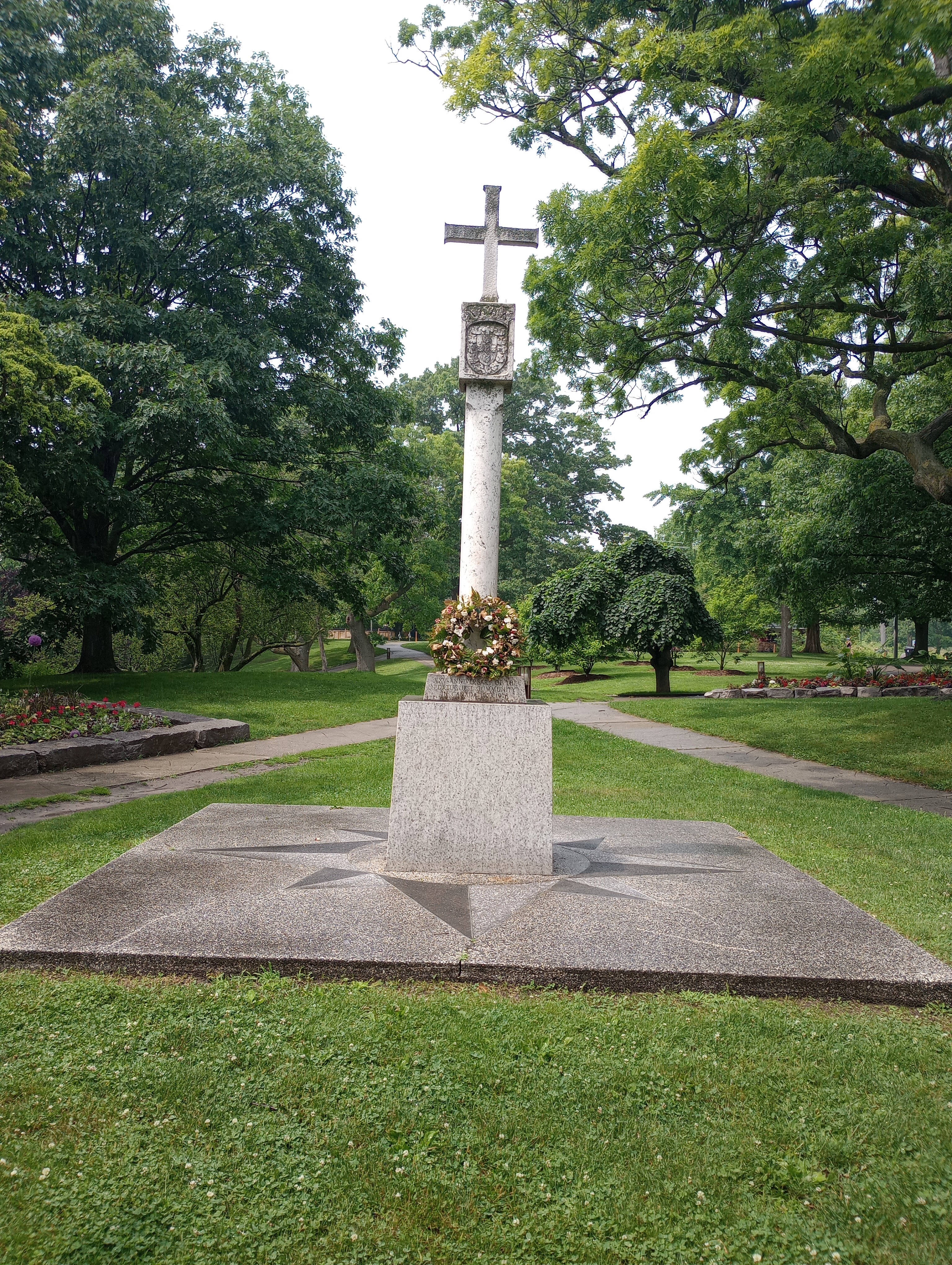
Exploring Local Histories-The Portuguese community in GTA-commemorated at High Park

Other practices I use to ground are 

(a) Metta- thank each part – from the other, thank the short breath, send loving kindness to any painful sore part of body

 (b) Mentors- invoking the spirit of Individual mentors . Invoking the spirit of the Sangha

( c) Mending my ways- the amends steps of 12 step spirituality.

Reference

Neff, K. (2019). The yin and yang of self-compassion: Cultivating kindness and strength in the face of difficulty. Sounds True.

Download Worksheet on Self Compassion

EARLIER PERSPECTIVES

EXPLORING COMMON HUMANITY- THROUGH READING JOURNALS

2025-JUNE- INHERITANCE OF LOSS

2014-FEB : REMEMBERING CHARLIE ANDREWS 

12th February is the feast of Charlie Andrews, the Christian missionary and close friend of Mahatma Gandhi. Viewed by some scholars as the alter-ego of the Mahatma, C F Andrews went on to do things in Fiji and Caribbean which Gandhi himself could not do physically. In Richard Attenborough’s “Gandhi” there is a scene in which when CF Andrews comes to bid goodbye, Gandhi says-..(paraphrased) –Between us there are no goodbyes. You will always be with me in my heart.

2009-FEB- REMEMBERING ANSAL ADAMS

“I believe in beauty. I believe in stones and water, air and soil, people and their future and their fate.” This was the personal philosophy of the great American photographer Ansel Adams whose birthday falls on February 20. He developed the zone system, a way to determine proper exposure and adjust the contrast of the final print. 

Dragons or Donkeys

Equanimity: Managing Anger -Comparing Narrative Therapy and CBT

I make myself rich by making my wants few

         Henry David Thoreau

Modern man no longer communicates with the madman . . …

  and expels from the memory all those imperfect words, 

of no fixed syntax, spoken falteringly, in which the exchange, between madness and reason, was carried out. 

Michel Foucalt, 1961, History of Madness

Foucalt: (15 October 1926 – 25 June 1984)History of Madness (1961)

In this article we discuss ways in which different approaches can benefit in defining an issue, taking the example of anger. Anger leads to loss of equanimity.       

The word equanimity comes from Latin roots meaning “even” and “mind”. Holding what passes through your mind in spaciousness to stay in balance, moving beyond the reactive mode is achieved by Equanimity. The chain of expectations, desires, wants, are broken leading to alleviation of suffering. 

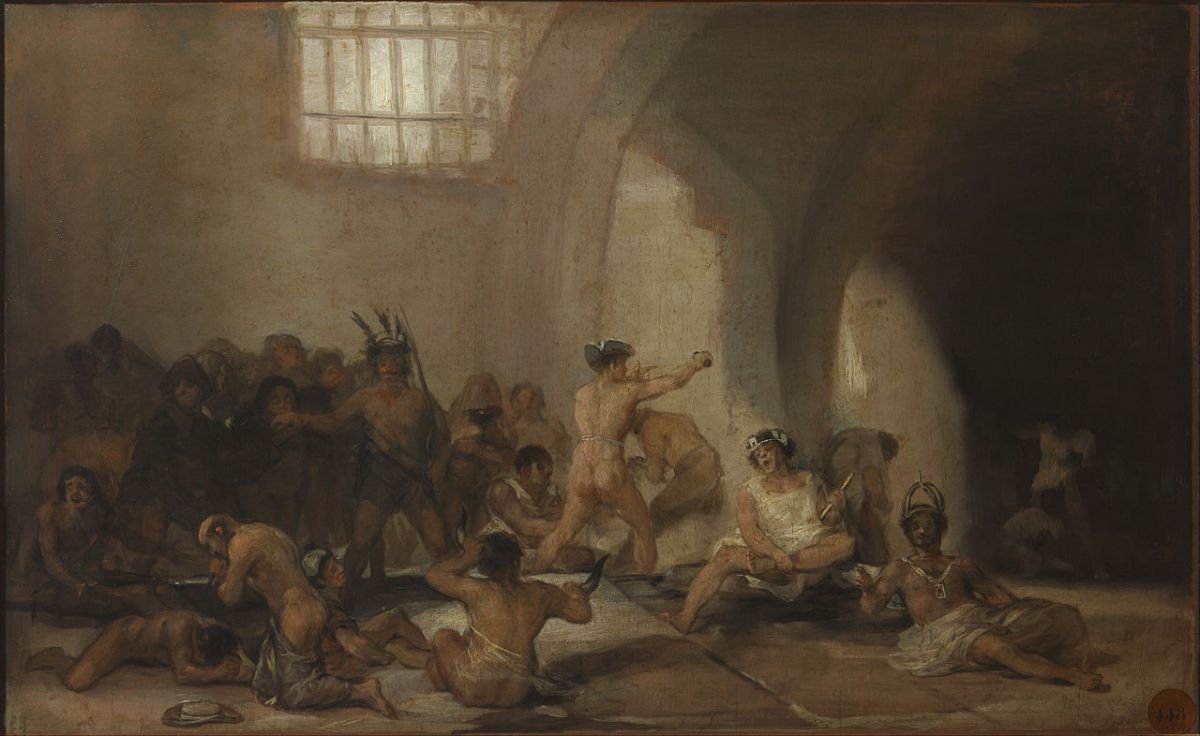
The Madhouse (Spanish: Casa de locos) or Asylum (Spanish: Manicomio) Francisco Goya- 1812-1819

The following are some exercises which I have found useful in moving into Equanimity.

1-      Write down ways in which one starts becoming less balanced. 

A written record of the ways in which one starts going into the cycle of expectations, desires, wants, fears, greed, disgust can give a good opening into the habits of the heart and head. One way to sharpen this focus is to read a newspaper/news-site for 15 minutes and keep classifying under the headings of greed, fear, disgust the feelings evoked by the articles.

 2- Developing Borders and Boundaries:  Remembering Spencer (White, 1984; White, 2007)

Spencer, the young boy who had the issue of soiling was told to characterize in near and particular terms, how this issue is affecting and ruling his life. His parents were told to characterize how this issue rules and ruins their lives. Then Spencer was asked to give a name to this issue of Soiling. He called it Mr.Mischief. They went on to relate to this issue in a particular rather than general manner, and in a near rather than distant way, thus helping define the boundaries and borders of the issue, get a better handle on it and define their relationship to the issue. 

This example of Spencer, illustrates how to externalize and objectify an issue which is affecting one’s life, and then create a statement of position map, which can help one create a plan and monitor our process.

3-     Creating personal examples : Balance of the Lotus

Eastern traditions see the Lotus flower as an embodiment of purity, enlightenment and rebirth. The balance between beauty and adversity are shown in the growth process of the Lotus, as it emerges above mud and water. It symbolizes  harmonious balance between earthly struggles and divine purity.

Nature walks and creating living symbols of these experiences has been a way to enhance balance in my life.

4- Case Scenario: Anger seen through different counselling approaches (Narrative/CBT)

Mr. S, presents with anger, which has affected his work, relationships, standing in community

NARRATIVE THERAPY APPROACH

  • Externalize – The history of anger, as if it is a creature outside of oneself waiting to get inside you
  • Therapist Role-is on listening, accepting, non-judgmental, non-confrontational statements..to be like a Junior Partner, Investigative Journalist, 

CONTRAST WITH CBT APPROACH

BASIC ID-Behaviour- writes angry letters, throws plants 

Affect                feels humiliated 

Sensations        pounding heart

Imagery              sees himself being taken away from grandson

Cognitions          I am a middle aged man who is being deprived of my rights,

                             standing in unfair manner

Interpersonal     angry at wife , sons, in-laws

Drugs                 takes alcohol to drown the pain

NARRATIVE THERAPY approach uses interventions like externalizing, metaphors, mapping to develop a near and particular relation with the issue.

Mr.S went into the history of anger, by asking to see it as a creature outside oneself who is thinking of ways to trick him into losing his calm.  Mr.S told of his early years of immigration from Bombay, India to Canada, how he saw his mother being beaten by his alcoholic father, his being bullied in school. As he became a teenager, he stopped these things as best as he knew.The “Bullied became the Bully”. On being asked to give a name for Mr.Anger he came up with two metaphors. He first called Mr.Anger the “Dragon”. However, on reflection he said, “If I am still riding this creature and getting taken for a ride in my seventh decade of life, then I am riding a Mr.Donkey”.

 After establishing rapport, agreeing that anger-related issues are worth exploring and addressing, we set about seeing how Mr.S has constructed his life around anger by

1- Externalizing anger

2- Deconstructing anger narratives

3- Re-authoring personal stories

4- Exploring values and intentions

5-Creating alternative responses

1- Externalizing anger

       Encouraging Mr.S to treat Mr.Anger as a separate entity or character helped distance himself from anger and view it as something outside of his core identity. Be doing this he gained a new perspective on his anger, started seeing how his life would be without anger and create a map to challenge the dominance of anger in his life.

2- Deconstructing anger

         We explored the stories and meanings Mr.S attaches to his anger. Through telling these stories we were able to examine the underlying beliefs, assumptions, and cultural influences that contribute to his anger. For example, as he recalled the weekend discussions which turned into angry arguments in his family of origin, he became more clear about how issues of safety, and the way to deal with un-ease through lashing out or suppressing became a dynamic in his life. This has in different forms played out in his family of creation, and he can now see this pattern even in his interactions with the in-laws of his sons. Deconstruction helped gain insight into the origins and maintenance of anger.

Scripting of the scenarios which continue to trouble him in is life in the present, helped develop alternative interpretations. Through role plays, we started developing better results.We refined these approaches through counselling and keeping an Anger Journal (He called it Riding with Mr.Donkey journal)

3- Reauthoring personal stories: 

The scripts made through externalization,deconstruction tools above helped Mr.S gain the power to rewrite his narratives, explore alternative perspectives and be more aware of how his prejudices and projections are affecting his relationships. New stories began to emerge which offered new ways of understanding and creating his experiences.

Shifting from being defined by anger to seeing himself as capable of change and growth, and being a channel of peace, understanding, and kindness has helped Mr S and his family be very different from where they were a year ago.

4- Exploring values and intentions: 

As Mr.S evolved from a “Head over Water” Survival level recovery to a more wholesome bigger version of himself, he began to examine his values and vulnerabilities, intentions and impact regarding anger. As we explored pivotal life moments, the purpose anger has served in his life, he changed his way of looking at his teenage years, and also his work, family and community. This led to a deeper understanding of his emotional experiences.

 This exploration  paved the way for aligning anger with personal values, he rebuilt his relationship with his estranged wife and children, and has started exploring healthier ways of expressing his needs, feelings, situations and story.

5- Creating alternative responses: 

The list of alternative responses to Mr.Anger (Dragon/Donkey) helped challenge the dominant narrative that aggressive or destructive behaviours result from anger. He started developing new strategies to harness anger constructively. His strengths, resources, alternative stories enabled him to respond to anger in ways more in life with desired outcomes.

Key points and summary

Creating balance through understanding the borders and boundaries of an issue helps one come up with creative ways to enhance life. Through keeping a written record of the way issues like anger speak in one’s life, how they disturb equanimity, we saw two different approaches to this issue- a classic Cognitive Behavioural therapy (CBT) approach and a Narrative therapy approach (NT). Creating a positive journal of values, symbols and metaphors (Lotus, dragon, donkey, map, territory, journey) helped co-create better life options. 

Exercise

       Do you have an issue which you need to see through a different lens? Write how it has spoken to you in your life and discuss as appropriate. Alternatively, write a letter to the issue.

White, M. (1984). Pseudo-encopresis: From avalanche to victory, from vicious to virtuous cycles. Family Systems Medicine, 2(2), 150–160. https://doi.org/10.1037/h0091651

White, M. (2007). Maps of narrative practice. WW Norton & Company.

Modern man no longer communicates with the madman . . 

. There is no common language, or rather, it no longer

 exists……..The language of psychiatry, which is a monologue 

by reason about madness, could only have

 come into existence in such a silence.

Foucalt, 1961

Re-membering

Understanding Grief: Finding Meaning Through Narrative Therapy

30 August is Grief Awareness Day. 

People who have lost someone have a certain look recognizable maybe only to those who have seen that look on their own faces. I have noticed it on my face and I notice it now on others. The look is one of extreme vulnerability, nakedness, openness.”

Didion, (2007, p.35)

The stages of grief model of Kubler Ross and David Kessler talks about Denial, Anger, Bargaining, Depression, Acceptance, Finding meaning. 

Case scenario– The long term partner chose not to be with him when he went for MAID- Medical Assistance in Dying as she did not want to increase the conflicts in his family. The step sons, brothers do recognize her, but the ex-wife and related persons would be uneasy by her presence. As she struggled with feelings of guilt, shame, confusion we turned to Narrative therapy informed techniques to deepen the finding meaning.

Remembering Conversations- Discussing the contributions of a loved one to your life, your contributions to their life and how one would imbibe those lessons and memories going forward

Background:  Re-membering is a Narrative Therapy (NT) intervention in which we dig deeper into the implication of one’s contribution to the person’s identity, that person’s contribution to our life, how one’s identity would be viewed through that person’s eyes and the implication of these contributions (White, 2007)

Finding meaning

The contribution to each other’s identity conversations led to how he had helped her process her loss when her ex-husband passed away, and she wanted to be there for the sake of her sons from that marriage. Her partner had helped her in that difficult stage and they found meaning in deeper conversations on the processes of family, parenting and life. Her own contribution to his identity was on finding renewed meaning in his connection with his step-sons, after his marriage dissolved. His step sons spoke at the funeral and mentioned how they had seen a different way of relating as their father (the only person they knew as their father- climbed upon him when they were children- as their own biological father had left when they were very small). 

When one views one’s identity through that person’s eyes, reflects upon the implications of these contributions one can find go beyond day-to-day life and have a richer connection.

Exercise

Stop and try to remember a person who has physically passed, and remember the joint energy of that relationship.

An aid could be try to remember a shared moment and see how it felt to be together, what remains from that moment and how you would imbibe that energy in your life.

Share as comfortable.


What was the experience of re-membering and sharing like.

My example: Nature walks early in the morning were a gift my father gave to me. I remembered him on his 4th death anniversary on a walk up the Hills near Haridwar, Uttarakhand India in 2003. That moment of imbibing the joint energy has been imbibed into my life by many such nature walks over the decades. One of his other contributions in my life was to model what a flashcard and a checklist would do to one’s work. In my pre-school years, I saw him make flash cards of important drugs, how they would interact with other drugs and with body systems in different stages of disease (he was an anesthesiologist). Having such flashcards and checklists have been part of my professional identity. 

Re-membering models could see these experiences (nature walks, checklists, flashcards) be revisited by seeing how these experiences contributed to each other’s meaning. As I went into hostel (medical school days-Delhi 1980s) we went for nature walks to the hills of Shimla, Himachal Pradesh, India and he talked about his younger childhood years, we prayed at the temples which he had visited as a child. Those pilgrimages, museum walks have imbibed in me the spirit of taking my own sons, nephews, nieces to museums, natural areas. 

My grade 3 teachers in St Vincent’s High School Pune, Maharashtra, India- 1975-76, introduced me to Charles Dickens through the story of Oliver Twist. The love of the written word is a legacy my parents passed on to me. They started our Home Library even before I entered grade 1.

If his spirit would see/experience this, he would view it as an extension of our walks together in the Western Sahyadri ranges and Northern Himalayan ranges of India.

Key words

Grief,  Finding Meaning, Identity, Definitional Ceremonies, Remembering, Narrative Therapy

Walks-New York Botanical Gardens; My parents instilled the love of the written word, nature and science in me. My mother, a botanist, created the first Rock Garden I knew, in Poona, Western India in 1970s. Looking at this Rock Garden at NYBG-June 2025-sent me down memory lane. What part of our identity is shaped by a loved one?

References White, M. (2007). Maps of narrative practice. WW Norton & Company.