
Typically a man expresses self-confidence and assurance in an early conversation with a prospective online match. Most women I know are attracted to this quality, and I had fallen for that brand of Alpha male myself plenty of times over the years. So when Jim told me that first night, “ I have a lot of self-doubt, : and said, “ I worry that I’m not a good enough man,” I might have turned and run; in fact I felt an impulse to do so. I suppose others would have too, though I am not sure that Jim had shared that level of self-disclosure with many. He could play the game of a successful San Francisco attorney, and he looked the part. He just never played it with me.
From the first day we spoke, he told me the truth about himself. I did the same
The Best of Us, Joyce Maynard, page 17.18
Learning from literature tool , creating existential maps and choosing to connect despite doubts are three pillars on which I help couples build their Couple-Bubble.
Learning from Literature: Jim (James Barringer-June 12-1952-June 16-2016)…
from the Best of Us- by Joyce Maynard

In the paragraph above, Jim is a mature man who instead of projecting an Alpha male personality, playing games, comes out as a person who is able to face the truth of his many facets with honesty and openness. This shapes the kind of man, and partner, he has become.
For those wanting to do a deeper dive into Learning from Jim– I would highly recommend this book, in which Jim talks openly about his failed first marriage, his long-term partnership with a colleague and how that relationship broke down as his children never accepted his partner, the changes in his life as he became associated with Joyce.
Their struggles with cancer, the medical system and the existential map are described in nuanced detail by the author.
Earlier Perspectives: Nuances and Lessons from the Dying-about Life and Living
It reminded me of another book on struggles with cancer, written by Paul Kalanithi – when breath becomes air- which I had discussed in a book club in 2019.
When Breath Becomes air-by Paul Kalanithi (discussed in Feb 2019 book club)
Creating the Couple Bubble-Choosing Connection over Doubt
In our work with those struggling with communication in intimate relations, we use Erikson’s stages of psychosocial development to develop a framework of choosing connection versus distancing.
Connection will lead to creation of a Couple Bubble in which both partners affirm each other, rather than a distancing pattern of blaming, hiding behind Victimhood and Self Righteousness.
Erikson’s Stages of Psychosocial Development are
- Trust vs. Mistrust. Age developed: Birth to 18 months. …
- Autonomy vs. Shame and Doubt. …
- Initiative vs. Guilt. …
- Industry vs. Inferiority. …
- Identity vs. Confusion. …
- Intimacy vs. Isolation. …
- Generativity vs. Stagnation. …
- Integrity vs. Despair.
Jadoo-Jail-Jao Yahan se…
(Black Magic-Incarceration-Return
variations in South Asian Immigrant Community)
Intimacy or lack of it, is linked to demon dialogues like- His family has done Kala Jadoo- Black Magic and is adversely affecting our relationship.
I tell such persons, who are sticking to their guns that while I do not know much about Black Magic, I can see some forms of Black and White Thinking in these dialogues.
Black and White thinking- is a form of Cognitive Distortion which is judgmental, stems from overthinking, all or none, emotional reasoning, discounting the positive and lack of openness to see the habits of the head and heart which keep us in negativity, isolation and blame-victim mode.


Choosing Intimacy, Not Isolation
Themes: Core of Intimacy vs. Isolation.
If one is practicing a program of recovery, one will see doubts as hindrances and in a calm, confident, clear manner see where black and white judgmental tones are hindering the couple-bubble.
In session this may look like this:
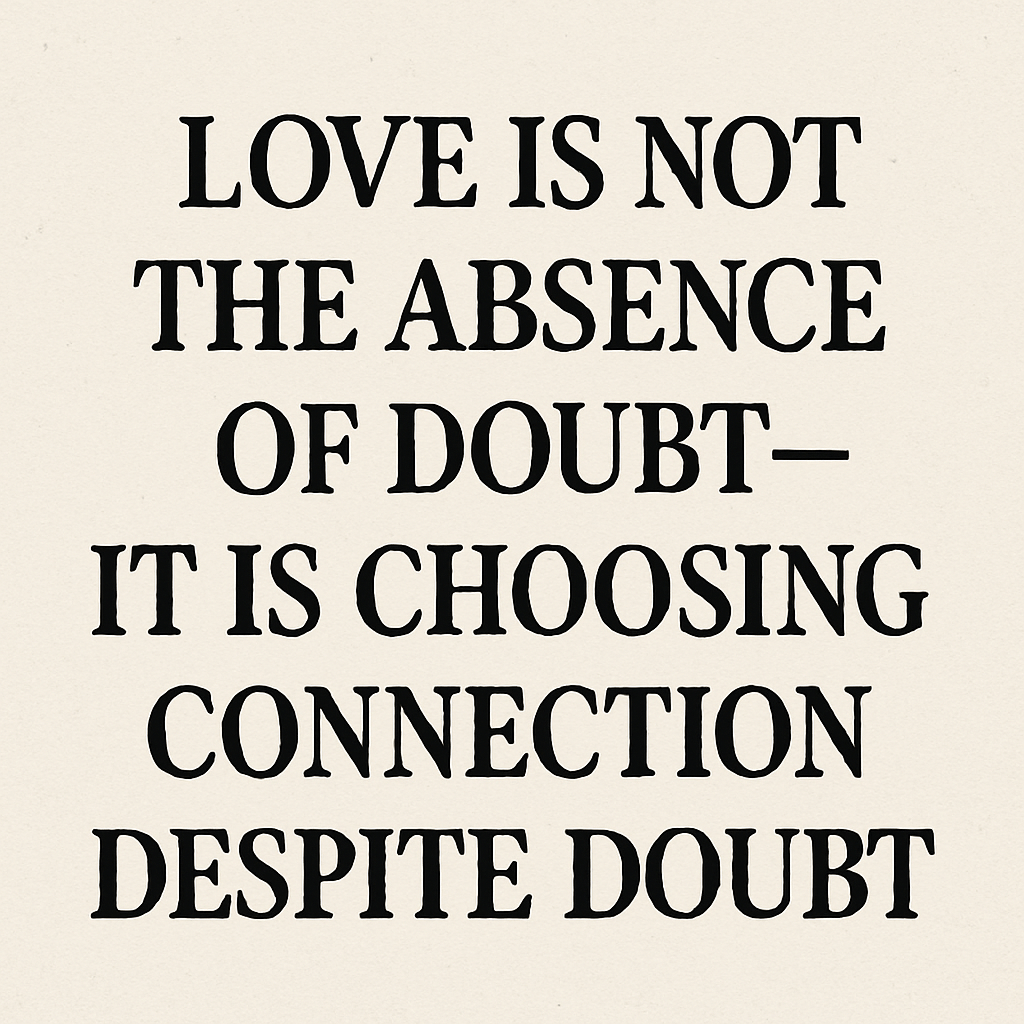
Therapist frame: “Love is not the absence of doubt—it is choosing connection despite doubt.”
Exercise: Couples practice Existential Dialogue:
Partner A says: “One fear I carry is that this talk of Black Magic is eroding my sense of safety
Partner B responds only with:
Here one can go two ways- the Blame Mode or the Responsibility mode
Blame Mode- You are under the spell of your mother, family of origin and ignore me and this black magic is affecting my health, sleep and sense of future
Responsibility mode: I hear you, understand how this may make you feel uneasy. May you be safe and happy.
Agreeing to take a time out, mindful pause when things are escalating into negativity, can be a form of Self Care and Relationship care.
Existential Framework:
Intimacy versus Isolation is the psychosocial stage which in this period of uncertainty can challenge the Couple-Bubble- where instead of looking out to see the obstacles of intimacy, trust, each partner becomes caught in Black and White, Us versus Them thinking which is a gateway to Mistrust, lack of faith in the relationship and the trend to going their separate ways. Research documents and contextualizes longevity of relationships in 21st century.

Altruism and Shared values are key ingredients for maintaining relationships in a challenging society.
Discussion: Explore how parenting vision, family vision and miscarriages and uncertainty make one retreat into isolation (avoiding intimacy, emotional distance).
Existential Reframe: Intimacy is about standing side by side in uncertainty.
Homework Suggestions:
Routines of Service Eg-Asking and listening how each other’s day went
Rhythms of Togetherness Evening tea, nature walk together, a shared meal
Reading and discussing a book together
(would highly recommend -The Best of Us)
Rituals of Intimacy Eye contact 5 minutes, Prayer-Chanting together
Drawing/painting a joint picture
https://maps.app.goo.gl/CYiqv2yiyzDzvq3t9
COUPLE BUBBLE
Exploring existential frameworks, life stages, the needs and feelings of each other and the consequences of having a long term committed relationship on one’s sense of self, future and relational safety are some ways to build a couple bubble.
In the next blog article we will discuss how to Establish and Secure a Couple Bubble.
As an additional tool to see one’s blind spots, the article on Johari Window and Patterns in Relationships can be helpful.
References
Heim, C., & Heim, C. (2023). “How did you stay together so long?” Relationship longevity, a cross‐generational qualitative study. Journal of Marital and Family Therapy, 49(4), 781-801.
Work sheet- Growing Together





 Candlestick Counselling and Psychotherapy Services