Subterranean Life of the Hour

Island Lake Conservation Area-Orangeville-Ontario; Sep 14-2025: Exploring the Subterranean Life of the Hour is one of my tools of growth.

In existential therapy, the “life of the hour” and what is unfolding in this very moment is used as a tool to help healing.

I have worked with supervisors who taught me to harness these moments and transform and expand the energy of the safe healing moments to other aspects of life. Another tool is to go beneath the surface of a client’s words, silences, what is left unsaid or the nervous tone, subtle giggles 

SLH-Subterranean life of the hour -James F.T.Bugental (1915-2008)

James Bugental, was the President of the Association for Humanistic Psychology (1967). He coined the term “subterranean life of the hour” to describe the implicit, unspoken undercurrents in session. This helps develop deeper understanding of feelings, meanings, existential concerns. The different dimensions of SLH include (but is not limited to)

1- Presence and Absence Shifts

How much each is fully engaged or avoiding or going on tangents 

2- Non verbal cues

The tone, volume, silence, interruptions, bodily tension, hesitations and energy of the room

3-Existential themes 

Themes such as freedom, mortality, isolation, meaning that may not be consciously acknowledged but shape the therapeutic moment.

4- The Living Process Underneath

Listening not only to what is said but also to the living process underneath, the background, development and energy of the therapeutic relationship. How one shows up for the sessions and willingness or unwillingness (it is an evolving spectrum) to engage and be accountable.

Case Scenario

Consider a man in his 40s who has just ended a 15-year marriage. He now lives with a new partner, but both have decided not to not get married and just see how things develop.  He feels unsettled about how he has to repeat same things again and again but his partner does not seem to get it. There is uneasiness about the hours spent in work -juggling between clients and extended family in different time zones and then spending weekends in costly dinners and outings.

 When the therapist gently suggests exploring how his or his partner’s family of origin and family of creation issues (both have had previous marriages) may be shaping his struggles, he lashes out angrily:

Client (C ) : I don’t want to talk about my family or the past. That’s not why I came here!”

Therapist (T):  (feels the sting of his anger but resists retreating into intellectual explanations)
I can feel your pushback. Something in our relationship tells me that we want to explore this moment, not go anywhere else

Principle: Instead of intellectual explanations, use reflection, touch on the “life of the hour” and the “Subterranean life of the hour” to harness the fears which fuel the anger. Leverage the fear of losing control, or being engulfed in tangential past issues which have gone by and not be seen in the present or be mis-seen.

Present Field: Dwelling together in the present field: his anger, the therapist’s steadiness, the tension, the unspoken vulnerability can be used to harness the therapeutic relationship as a supportive relationship.

Worksheet

The following worksheet explores the tool of Subterranean Life of the Hour, with examples from the above scenario, and prompts of grounding, naming, attunement, dialogue and integration. If you would like to explore an existential issue – in a customized manner, you can reach out to Prashant Bhatt  or 6478181385


Worksheet: Exploring the Subterranean Life of the Hour

This worksheet is meant to help clients (and therapists) pause, reflect, and tune into the implicit life of the present moment.

Eg-Client – in his 40s-struggling with his common law partner lashes out angrily saying has not come here to see family of origin or family of creation (past failed marriage) issues

1- Presence and Absence Shifts

How much each is fully engaged or avoiding or going on tangents 

Principle: Engagement

Rest Stop

 Does the lashing out mark a rupture. If yes, how would you see it going forward.

If no- why not?

2- Non verbal cues

The tone, volume, silence, interruptions, bodily tension, hesitations and energy of the room

Principle: Mindfulness

Tool: Grounding

Take three slow breaths.

Notice your body: Where do you feel heaviness, tightness, warmth, or flow?

Let the present moment be enough.

Let Go and integrate the breaths with any uneasy feelings

3-Existential themes 

Themes such as freedom, mortality, isolation, meaning that may not be consciously acknowledged but shape the therapeutic moment.

Principle:  Naming the Hour

Tool: Without analyzing, put words to what is happening here and now.

Eg- The therapist named the anger, unease to explore habits of heart and head.

4- The Living Process Underneath

Listening not only to what is said but also to the living process underneath, the background, development and energy of the therapeutic relationship. How one shows up for the sessions and willingness or unwillingness (it is an evolving spectrum) to engage and be accountable.

Principle: Attunement Practice

  • Notice the other person’s face, tone, body language.
  • Notice your reactions (tightening, softening, pulling away, leaning in).
  • Practice holding both realities—mine and theirs—without judgment

Eg- The creation of empathy, going into the causes and conditions which led a person to have a certain position may be useful clues

Exploring Disconnection, resonance, what is left unspoken can be part of growth.

Rest Stop: When was the last time you felt unheard? How did you react? How do you feel about it now?

Note after the first three steps of 

1- Grounding

2- Naming

3- Attunement 

We can deepen this process by

4- Dialogue

5- Integration

Step 4. Dialogue with the Subterranean Life

Imagine the subterranean voice of the moment speaking.

1- Mindfulness of time tool- If we were having this conversation 20 years from now, what part of yourself would be protective, supportive of your needs.

2- Mindfulness of time-with spirit tool: if we were two spirits (on a human journey) having this conversation 200 years from now, what would you smile at.


Step 5. Integration

I use Mindfulness (Satipatthana) and Johari window to work through the issues of head and heart, intuition and intellect and create a customized map to help clients navigate and negotiate their journeys.

For eg- in the man in his forties who lashed out, we returned to the breath, body, energy of the room and wrote down one sentence which would capture what he discover about himself, his values and how the world works from the existential dissection of his moments of anger.

End Note

Intellectualization would lead to dismissal using words like “resistance” or pathologizing using terms as “avoidance”. Instead, by leaning into the subterranean life of the hour, engaging, grounding, naming and attuning with the pushback, we explored this factor with an attitude of invitation.

This attuned stance created a doorway to deeper truths: his anger was not against the therapist but against the unease of losing safety again.

All recovery lies in the pause. Pausing to notice and harness the subterranean life of the hour helps discover the underlying truths and longings for connection, recognition and freedom.

Breeze – Mindfulness of Breath – Some conversations on International Self Compassion Day-2025

International Self Compassion Day -2025-(July 19-2025)

In Kristen Neff’s book on Self Compassion she lists Common Humanity, Self Kindness and Mindfulness as three components of Self Compassion and also gives interesting exercises on being average which brings to focus the competitive nature of our culture, how the pressure to be better erodes the fun in just being. 

So, as part of this exercise of being average, I went for a walk by the Humber-Etiune Brule -Old Mills, had a cheese tuna sandwich at Caldense Symington and a small coffee at the Tim Hortons on Bloor with three trusted fellows-spiritual fellow travelers. 

We are just average persons in Greater Toronto Area-GTA, getting along in our lives. Each relationship has taught me some nuances of day to day life, enriched me and helped develop a deeper understanding of our shared journeys.  

In this blog will tell of some lists, some talks across the world and my experiences in interrogating the Satipathana and Anapanasati Suttas which have helped further my mindfulness practices.

Common Humanity: Our shared walks in North Africa

As part of intentionally reaching out, had a talk with a fellow traveler, a South Asian who has lived and worked in the Arab world. We had spent almost a decade together in Tripoli, walked together during the 40 year celebrations of Gaddafi’s regime and then witnessed first hand on the ground the revolt in the 42nd year. I remember the day he and another fellow traveler sat together for a dinner which I had imagined would happen soon, after the intense fighting would stop. Our journeys together helped me see the way he has imbibed humour to lessen the pain of forced internal migration from his homeland Kashmir. Navigating the medical world in different continents have helped him see what is possible, where we have dilemmas and how to negotiate with persons in power.

Self Esteem: Readings by the Humber, Lake Ontario, Rouge and the Zoo

Sketch Studies, Mindfulness walks in Nature and Discussions in Cafes

Does one matter? Am I a 5/10 or more when it comes to having a positive effect or less? (10 being yes I matter). These questions by Neff made me recall some walks I had in the zoos of Tripoli in 2009 when I told my sons about Thoreau’s Walden pond and the principles of Objectivity, Simplicity, Self Reliance which guided  Transcendentalists like Emerson, Thoreau, Alcott (author of Little Women).

Doing readings together, keeping notes, and engaging in a reading group, imbibing the lessons into a reading journal are part of my family legacy, passed on to me by my parents, grandparents and uncles, aunts, sisters. Following this, it gave me immense satisfaction to read about my son’s recent visit to Walden pond where Thoreau stayed in the mid 19th century.

This morning, on International Self Compassion day- went through some works of Kiran Desai-Inheritance of Loss, and reflected upon the relationship between the Judge (Jemmubhai), and the cook, who asks for punishment for his wrong doings, how his orphaned granddaughter Sai tries to intervene. Set in the backdrop of the Gorkhaland movement, the novel follows the stories of Biju, the cook’s son as a worker in the restaurants of New York City and his interactions with other Indian diaspora from different continents. The Indians of East Africa have a different way of relating to India, USA. 

Going by the reading journals and discussion groups I have had over the decades I would give myself a rating of over 5/10 in whether I mattered to my groups, family in this aspect.

Mindfulness: The Breath as a Gateway to Satipaṭṭhāna and Ānāpānasati

We Are of a Tribe by Alberto Rios

The dream of sky is indifferent to all this,
Impervious to borders, fences, reservations.

The sky is our common home, the place we all live.
There we are in the world together.

The dream of sky requires no passport.
Blue will not be fenced. Blue will not be a crime.

Look up. Stay awhile. Let your breathing slow.
Know that you always have a home here

Was guided by an experienced practitioner on how the breath is the gateway to both Satipaṭṭhāna and Ānāpānasati the intention is different. In Satipaṭṭhāna there is mindfulness with letting go , non attachment and the structure which gives  grounding at each level. The sutta has seven spokes at levels of body (anatomy, elements, death), feelings, thoughts and principles. Ānāpānasati moves from long and short breath awareness to whole body awareness and calming.

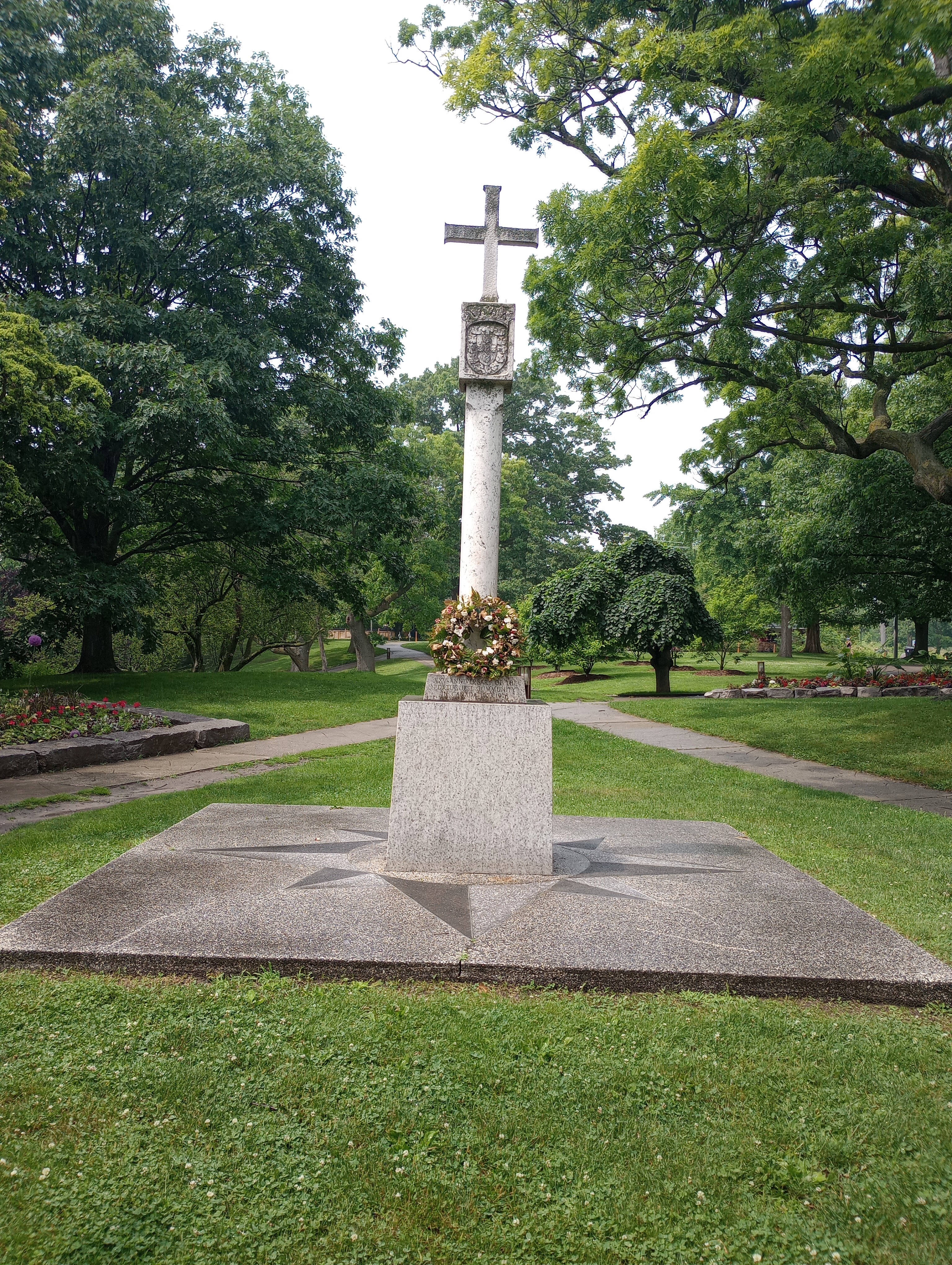
Exploring Local Histories-The Portuguese community in GTA-commemorated at High Park

Other practices I use to ground are 

(a) Metta- thank each part – from the other, thank the short breath, send loving kindness to any painful sore part of body

 (b) Mentors- invoking the spirit of Individual mentors . Invoking the spirit of the Sangha

( c) Mending my ways- the amends steps of 12 step spirituality.

Reference

Neff, K. (2019). The yin and yang of self-compassion: Cultivating kindness and strength in the face of difficulty. Sounds True.

Download Worksheet on Self Compassion

EARLIER PERSPECTIVES

EXPLORING COMMON HUMANITY- THROUGH READING JOURNALS

2025-JUNE- INHERITANCE OF LOSS

2014-FEB : REMEMBERING CHARLIE ANDREWS 

12th February is the feast of Charlie Andrews, the Christian missionary and close friend of Mahatma Gandhi. Viewed by some scholars as the alter-ego of the Mahatma, C F Andrews went on to do things in Fiji and Caribbean which Gandhi himself could not do physically. In Richard Attenborough’s “Gandhi” there is a scene in which when CF Andrews comes to bid goodbye, Gandhi says-..(paraphrased) –Between us there are no goodbyes. You will always be with me in my heart.

2009-FEB- REMEMBERING ANSAL ADAMS

“I believe in beauty. I believe in stones and water, air and soil, people and their future and their fate.” This was the personal philosophy of the great American photographer Ansel Adams whose birthday falls on February 20. He developed the zone system, a way to determine proper exposure and adjust the contrast of the final print. 

Mindfulness Labyrinths

Satipatthana is a compound of Mindfulness (Sati) and either Patthana- Foundation or Upatthana – Presence. This compound can be interpreted as – Sati-patthana – Foundation of Mindfulness or Sati-upatthana- Presence of Mindfulness

Analayo-2006, 2022

Walks and Mindfulness: Niagara on the Lake-March 2025 : The 12 steps are one of the widely known spiritual paths introduced by Bill W and Dr Bob in the 1930s. They evolved from the Oxford Group. The Big Book of Alcoholics Anonymous was written around 1939. The traditions were evolved in the 1940s as the AA organization and movement grew and they imbibed the lessons from a group -The Washingtonians who had existed in 19th century

Establishing a practice of Mindfulness can start with listing the ways one is not mindful. A five minute break at the end of every three hours can be a way to check in and see where we are in the practice of a particular tool.

Labyrinths in a Retreat

Having practiced the 12 steps with a fellowship, I was eager to impress the priest about my knowledge and application of the steps, spirituality, and work with a sponsor ( a person who knows one’s story, will hold us accountable to the 12 step path, and agree to be our sponsor).

She listened to the different aspects of the program, what brought me here, how I progressed, what pitfalls and roadblocks I had observed and where I see myself in the coming months in this path. 

Practice one tool a day, and check in where you are in the awareness and application of that tool. This suggestion by the priest helped me strengthen my program and be more mindful of the way I do the program, how I spread the message and what I need to do less of.

Earlier Perspectives

Dialogues- how they arise, develop and affect.

           Silence before a conversation can be a starting point to being mindful. Be aware of the energy, the feeling (ease or unease- inside, in the other , in between) and the biological way in which the voice is generated. 

A coach once taught me the way the voice is coming from either the throat or the head or the throat or even stomach and the difference in way it comes out if one is aware from where we are speaking. It is more high pitched from higher areas and deeper if from lower areas.

He also mimicked two US Presidents and showed the difference between the folksy- I am a regular guy like you tone of one and the preacher voice of another. After he demonstrated that, I heard the speeches of both Presidents again and realized how true his observation was.

Walks in North Africa- Libya-2016 January- Establishing a Mindfulness practice can be a creative enterprise which helps us connect with energies of other times and places. In this walk in the Tripoli Medina area of North Africa, we see and connect with the energies of sea farers of the centuries gone by

Worksheet

Common Day to Day themes to be mindful of

NoThemeMPComment
15 minute break
5 minute break
33During the break I realized that my breathing, posture, gait needed to be better. I stretched by back and straightened the way I sit
23 hour slots
3 hour slotsDuring the past three hours, I was mindful of the way I drive, did I let some drivers enter the freeway before me, did I overspeed. On getting to my place of work, or study- I first checked in on the common spaces and did some service for the good of the organization, institution (or did not bother and just rushed into my own work space)
3Labyrinths
The bigger picture and detours
LabyrinthsThe bigger picture of where I am headed, what ways I can go off track. In the example above, I wrote of doing a retreat in guidance of a priest. She was my spiritual mentor. It helped me align my program a bit deeper and also made me see the primary purpose , my relationship with a higher power and the fellowship in a deeper way.
4SummaryWhat new insightAny change
SummaryThrough this exercise, I also saw the way voice is generated, how high and low pitch are related to anatomy. In addition, a coach helped me see the energy generated by two famous public speakers- one a folksy regular guy, the other a preacher voice
Write a summary of what this exercise in mindfulness meant to you
5Follow-up
Follow-upLaying the Foundation of Mindfulness I became more present to the persons I am speaking to . As a follow-up I made a note of times when I held space for them to open up, and the times when I had an urge to give them feedback and let it be.
Write one step you implemented in the past week.Discuss with a person with whom you practiceWhat new insights were gained.

M- Mastery- how good am I on a scale of 0 to 5 in implementing this tool (5 being best, 0-not existent)

P- Pleasure- how much pleasure or sense of achievement did I get in implementing this tool 

 (5 great pleasure/sense of achievement 0-non existent) (Burns & Arens, 2020)

References

Anālayo, B., Medvedev, O.N., Singh, N.N. et al. Effects of Mindful Practices on Terror of Mortality: A Randomized Controlled Trial. Mindfulness 13, 3043–3057 (2022). https://doi.org/10.1007/s12671-022-01967-8

Satipaṭṭhāna: The Direct Path to Realization

Burns, D. D., & Arens, B. (2020). Feeling Great. Findaway Voices.

Contact 

Prashant Bhatt,  develop a personalized program of Mindfulness

001-6478181385,

Psychology Today

Candlestick Counselling Services

DOWNLOAD WORKSHEET

Systems for Resilience

Self Care: Sculpture Gallery-Henry Moore (30 July 1898 – 31 August 1986)- Art Gallery of Ontario https://ago.ca/collection/henry-moore-sculpture-centre

In this site, we explore how to build Personalized Models of Resilience by examining the factors and forces which build your systems

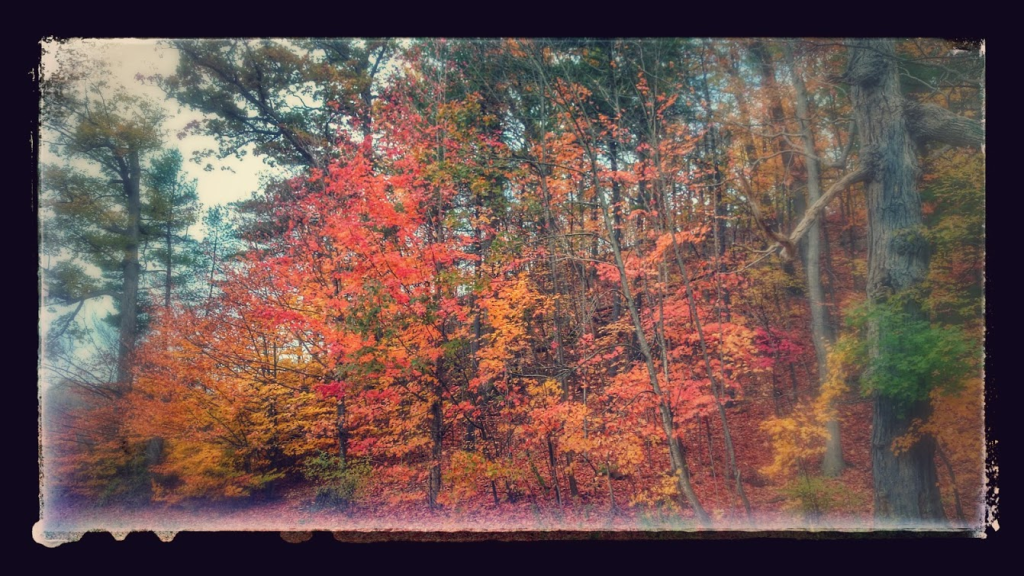
Riverwood Conservancy- Walks in Fall-Mississauga, Ontari, Canada 2016 (Photo by Prashant B)

Strategies for Self Care- Having a Thinking Place and making the time to go there is a discipline which has enriched my life in many ways.